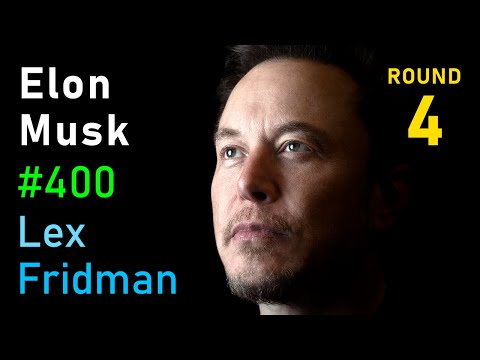
Lex Fridman Interviews Elon Musk: AI, Mars, and the Future of Humanity
⚡ Key Takeaways
-
Musk believes AGI (Artificial General Intelligence) will arrive by 2029 and that AI safety is 'the most important problem facing civilization.'
-
The Mars timeline: Musk targets first uncrewed Starship landing on Mars by 2026, with humans following by 2030 — a self-sustaining colony by 2050.
-
On Tesla Full Self-Driving: Musk claims the neural net approach will achieve superhuman driving safety, reducing accidents by 10x compared to human drivers.
-
Musk's daily schedule: he works 100+ hours/week split across Tesla, SpaceX, and xAI, sleeping only 6 hours — and admits this is 'not sustainable.'
-
His biggest fear isn't AI itself but AI aligned to a narrow set of values controlled by a small group of people — which is why he founded xAI as a counterweight.
📝 Detailed Summary
Lex Fridman opens by asking Musk about the current state of AI development, and Musk immediately sets a serious tone. He believes we're in the most consequential decade in human history. The development of AGI — artificial intelligence that matches or exceeds human cognitive abilities across all domains — is not a distant sci-fi scenario but an engineering problem that multiple companies are actively solving. Musk estimates AGI arrives by 2029, give or take a year.
The conversation shifts to AI safety, where Musk becomes visibly animated. His concern isn't the Hollywood scenario of robots attacking humans. It's more subtle: AI systems trained to optimize for engagement, profit, or a narrow set of values could reshape society in ways nobody intended. He draws a parallel to social media algorithms that were designed to maximize engagement and accidentally amplified polarization. Now imagine that dynamic with a system 1000x more capable. This fear motivated him to found xAI — not to win the AI race, but to ensure at least one major AI lab prioritizes "understanding the universe" over commercial optimization.
Mars colonization takes up a significant portion of the interview. Musk walks through the Starship development timeline with surprising specificity. The fully reusable rocket system is designed to reduce the cost per ton to Mars orbit by 100x compared to any existing system. He envisions fleets of Starships departing during each Earth-Mars transfer window (every 26 months), carrying both cargo and crew. The goal isn't flags-and-footprints exploration but a genuine backup plan for civilization — Musk bluntly states that a single-planet species has a "nonzero probability of extinction."
When Fridman probes Musk's personal life, the conversation takes a reflective turn. Musk acknowledges that his 100+ hour work weeks, split across Tesla, SpaceX, xAI, and other ventures, take a real toll. He sleeps about 6 hours per night and admits the schedule "is not something I'd recommend." But he frames it as a calculated sacrifice: the window for making humanity multi-planetary and ensuring AI goes well might only be a few decades, and he feels personally compelled to push as hard as possible during that window.
Tesla's Full Self-Driving technology bridges the AI and transportation discussions. Musk explains that Tesla abandoned the traditional robotics approach (hand-coded rules, radar, lidar) in favor of a pure neural network trained on billions of miles of video data. The car literally learns to drive by watching how millions of humans drive. He claims this approach will eventually achieve safety levels 10x better than human drivers — meaning FSD could prevent 90% of the ~40,000 annual traffic deaths in the US alone.
The interview closes on a philosophical note. Fridman asks what gives Musk hope. Musk's answer is characteristically direct: "The fact that we're having this conversation." He believes that humanity's ability to recognize risks, debate them openly, and course-correct is the ultimate safety mechanism — but only if that conversation remains free and uncensored.
✅ Action Items
- Watch Musk's full argument on AI safety to form your own opinion — the nuances matter more than headlines
- If you work in tech, consider how your product's optimization functions might have unintended second-order effects
- Follow SpaceX Starship test launches to track the Mars timeline in real time (next major test expected within months)
- Try Tesla FSD (request a test drive) to experience neural-net-based driving and form your own judgment on the technology
- Read 'The Hitchhiker's Guide to Mars' (free SpaceX resource) to understand the engineering challenges of Mars colonization
Want summaries like this for any video?
Paste any YouTube URL and get key takeaways, detailed summaries, and action items in seconds.
Try Vydcut Free →